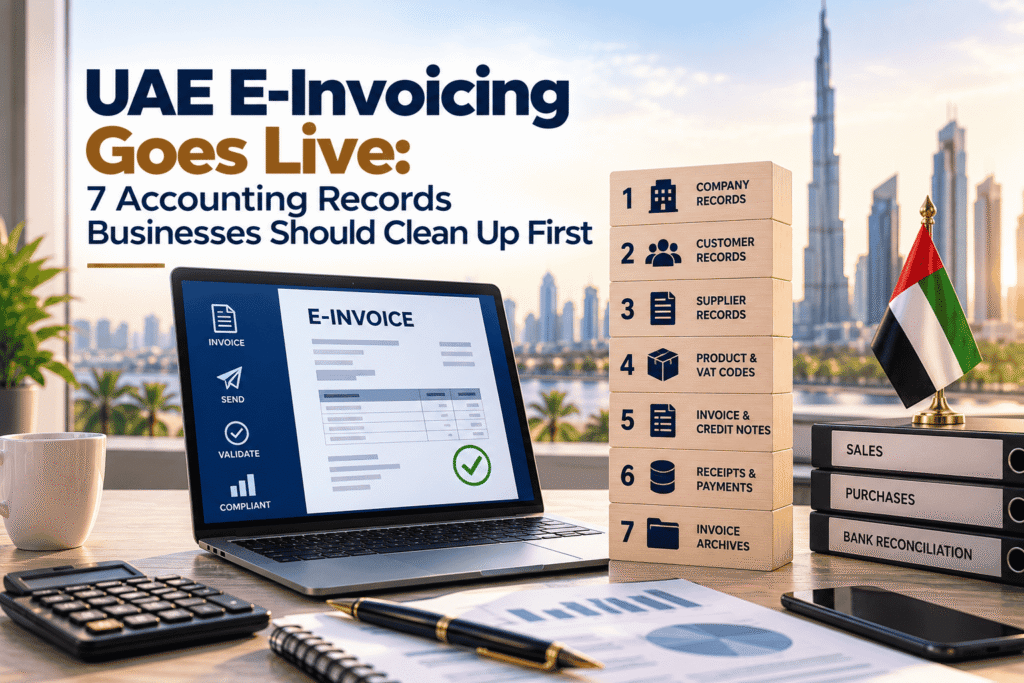
Could we send an invoice straight from our accounting records without correcting it by hand? That question exposes the preparation UAE e-invoicing needs. A customer name changed on a PDF may still be wrong in the system generating the next bill.
Our accounting, bookkeeping and tax advisory work at Jitendra Chartered Accountants (JCA) connects these records with the obligations behind them. We also provide e-invoicing readiness and implementation support. We recommend beginning with the information your finance team already uses.
Which Accounting Records Should Businesses Clean Up Before UAE E-Invoicing?
For businesses within scope with annual revenue of AED 50 million or more, an Accredited Service Provider ( ASP) appointment is due by October 30, 2026, with mandatory implementation starting January 1, 2027. An ASP handles electronic exchange, but the business still needs accurate source data.
The following records deserve attention before testing begins. Some feed invoices directly; others explain balances and adjustments when something does not reconcile.
1. Company Registration and Tax Records
Begin with the legal entity issuing the invoice. Its registered details should agree across the accounting system, supporting documents and EmaraTax profile.
A trading name on a template may differ from the registered name. Resolve that difference at the source. Keep tax identifiers clearly labeled so staff do not confuse the entity’s identification details with those belonging to another group company.
2. Customer Master Records
If sales staff open a new account whenever a customer changes its billing contact, the same buyer may appear under several names. Review those duplicates before transferring records into an e-invoicing connection.
- Confirm the correct contracting entity.
- Verify billing addresses and applicable tax identifiers.
- Record electronic invoicing details separately from email addresses.
Preserve transaction history when correcting customer accounts. A cleaner customer list should still let the team trace earlier invoices and receipts.
3. Supplier Records and Purchase Ledgers
Incoming invoices need attention too. Match supplier accounts to the legal entities that issued the documents, especially where payments go through a trading name or collection agent.
Reconcile supplier statements against recorded purchases. An invoice entered under the wrong supplier can leave one account showing an unexplained credit while another appears overdue. Resolve the posting with supporting evidence rather than simply moving the balance until the totals agree.
4. Product, Service and VAT Code Records
The Ministry’s published tax-invoice checklist contains 51 numbered fields, including item descriptions, units of measure and tax categories. Preparation therefore reaches beyond the invoice header.
Replace vague item labels with descriptions that identify the actual supply. Review tax-code mappings against the transaction’s treatment, rather than copying the setting from a similar product. Where staff routinely override a code, find out why before automating it.
5. Sales Invoice and Credit Note Registers
Pick a recent return or billing correction and follow it through the records. Can someone find the original invoice, understand the adjustment and reconcile the resulting customer balance?
Investigate duplicate invoice numbers and missing credit-note references. Keep canceled documents identifiable. Deleting an inconvenient entry may tidy a report while removing the explanation another accountant needs later.
Document any correction to historical records, including who approved it and why.
6. Reconcile Customer Receipts and Advance Payments
A bank receipt does not explain which invoice it settles. Unallocated payments can leave paid invoices on an overdue report, while advances may sit separately from the contracts they relate to.
Work through these items before testing opening balances:
- Allocate receipts to the correct invoices.
- Investigate unapplied customer credits.
- Match advances to contracts and related invoices.
Keep the evidence behind each allocation. If the customer’s payment reference is unclear, obtain clarification instead of assigning the receipt to the oldest balance automatically. An unresolved item needs an owner and a follow-up date.
7. Organize Invoice Archives and Audit Trails
Try retrieving an invoice without asking the employee who originally processed it. Then locate its correction history. Missing attachments or files stored in personal folders will become apparent quickly.
UAE guidance requires electronic invoices, electronic credit notes and associated data to remain secure and available for production to the tax authority. Outsourcing storage does not remove the business’s responsibility to retain accessible records.
Agree how records will be exported if the provider changes. Include retrieval in acceptance testing, alongside sending and receiving invoices. A successful transmission alone does not demonstrate that finance staff can later produce the complete record.
How Jitendra Chartered Accountants Helps With E-Invoicing Preparation
Which records would delay your first successful invoice exchange? We help identify gaps through our e-invoicing readiness assessments. Our services include compliance advice, ASP selection assistance and coordination of system integration and testing with your chosen provider.
We can review the preparation your business needs and help turn outstanding issues into an action plan. Contact Jitendra Chartered Accountants to arrange a readiness assessment.
FAQs
Which accounting records need cleaning before UAE e-invoicing?
Start with company registration details and customer records, then reconcile invoices, supplier information, tax codes, payment allocations and supporting archives.
Do emailed PDF invoices meet UAE e-invoicing requirements?
No. The UAE framework requires structured electronic invoice data; emailing an ordinary PDF does not satisfy the electronic invoicing requirement.
Which customer data errors should finance teams fix first?
Review duplicate customer profiles and tax identifiers first. These records feed repeated transactions, so corrections prevent the same errors from recurring.
Can a journal entry replace a credit note?
An accounting entry changes ledger balances. A credit note documents an invoice adjustment and needs its own traceable supporting records.
How does JCA support UAE e-invoicing preparation?
We review readiness, advise on compliance, assist with provider selection and coordinate integration and testing alongside your accredited service provider.